
“LOCAL ÉS GLOBAL”
(Local is Global)
The Documentary Photography Archive of the Banco Sabadell Art Collection was founded in 2013. This archive was initially created based on works from Spain and abroad, most of which had never previously been on display, presented at the DOCfield Festival, which was organised by the Photographic Social Vision Foundation until 2018 in Barcelona. The goal was to recognise the social importance of documentary photography and photojournalism. Over time, the photography archive has been complemented with prize-winning works from the prestigious annual World Press Photo contest as well as other sources.
“Local és global” (Local is global) is showcasing a selection of more than 50 photographs from this collection for the first time. This fascinating compilation offers testimonies of recent times, with selected works that display acute awareness and notable social commitment. Faithful to the objectives and values of the greatest photojournalism, this exhibition explores humankind’s shared contexts and challenges at both the local and global level: migration, the effects of climate change, economic and political crises, civil protests, and bodies as both places of conflict and also places to reclaim identities.
In an increasingly global context saturated by all types of images, this collection highlights the meticulous work and responsibility with which these artists carry out their work. The collection also showcases their talent and ability to breathe new life into visual narratives, which are so essential to create emotional and intellectual bonds between the audience and the documented realities. This exhibition invites us to cross borders, see ourselves in other people and walk in their shoes and experience an unfiltered testimony of the complex journey through which we travel as humans, with the clear goal of stimulating our senses, enriching our understanding, and strengthening our critical perspective.
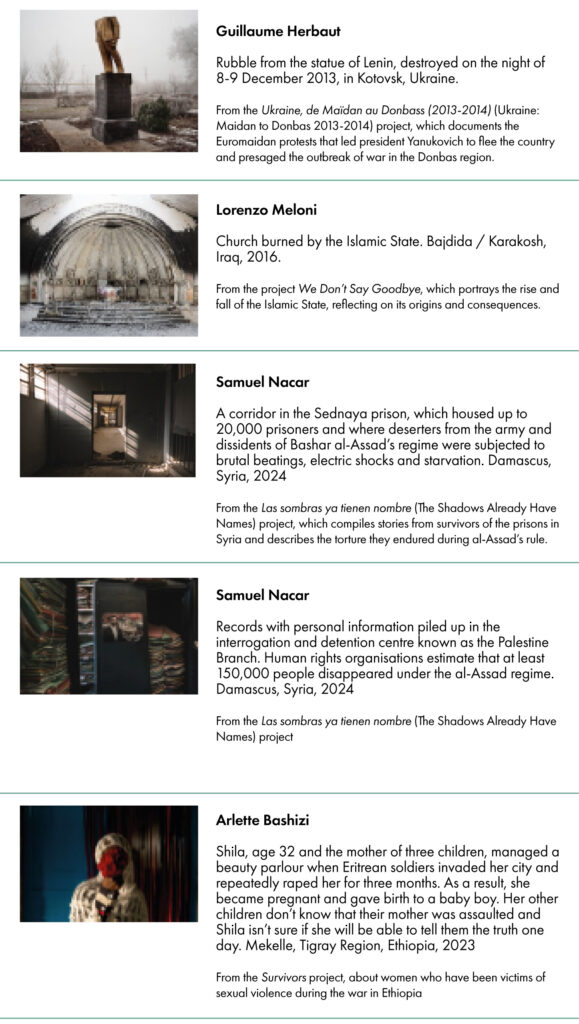
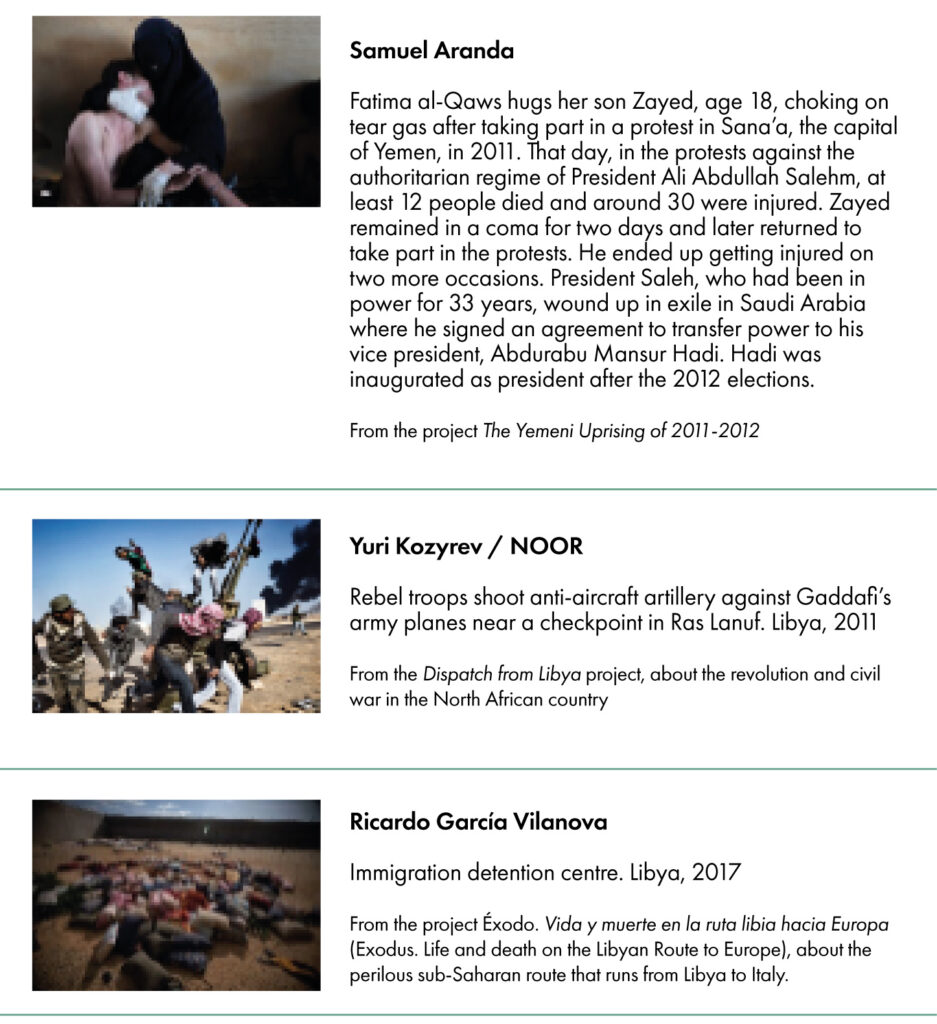
WARS AND CONFLICTS, BEYOND THE NEWS
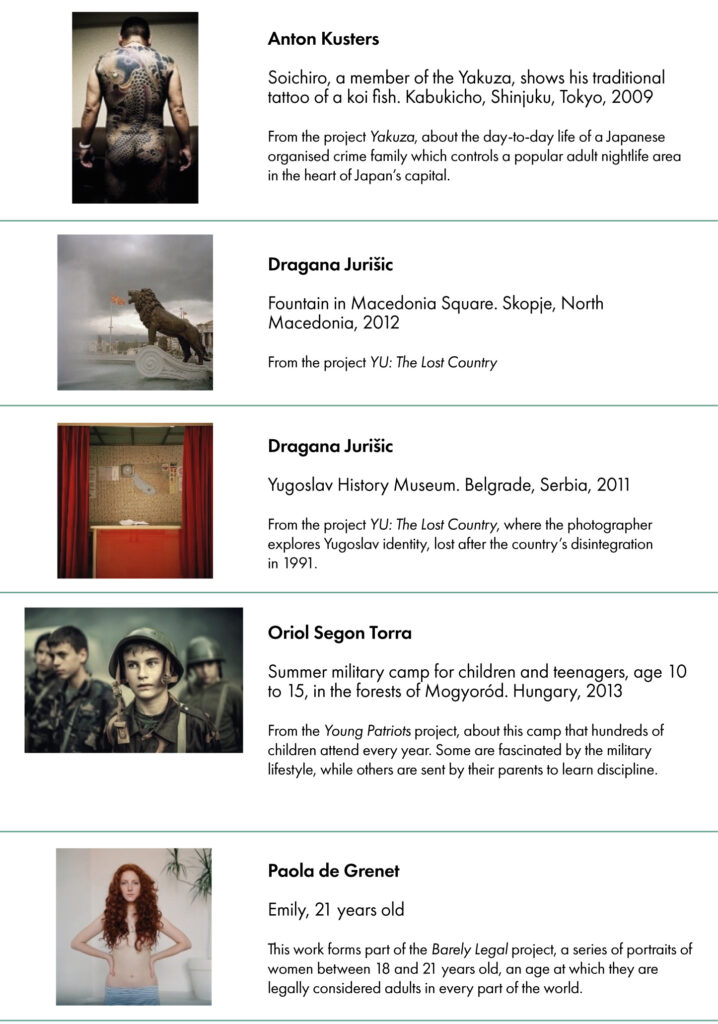
Border conflicts that break out into wars of unexpected proportions. Terrorist groups that extend their power in post-colonial territories that are still at the mercy of foreign intervention. Uprisings against authoritarian governments that put down the revolts with extreme violence, including mass arrests and murders, to keep their grip on power. And as always, civilians suffering all types of abuse, especially women.
These are realities that can be documented on the ground, with professionals running serious risks when events start to explode. Nevertheless, reflecting on the consequences after the fact can help us to go further by depicting devastated landscapes and abandoned spaces that function as powerful metaphors of what has happened, or personal testimonies of struggle, survival and resilience that allow us to delve into the damage inflicted by those who are responsible for and complicit in wars.
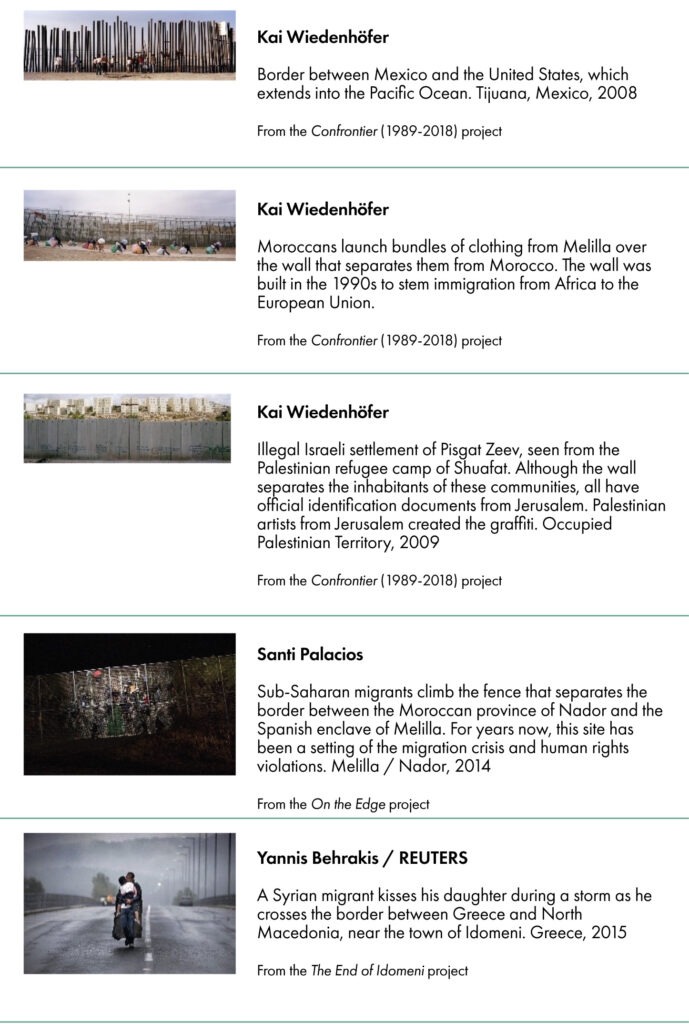
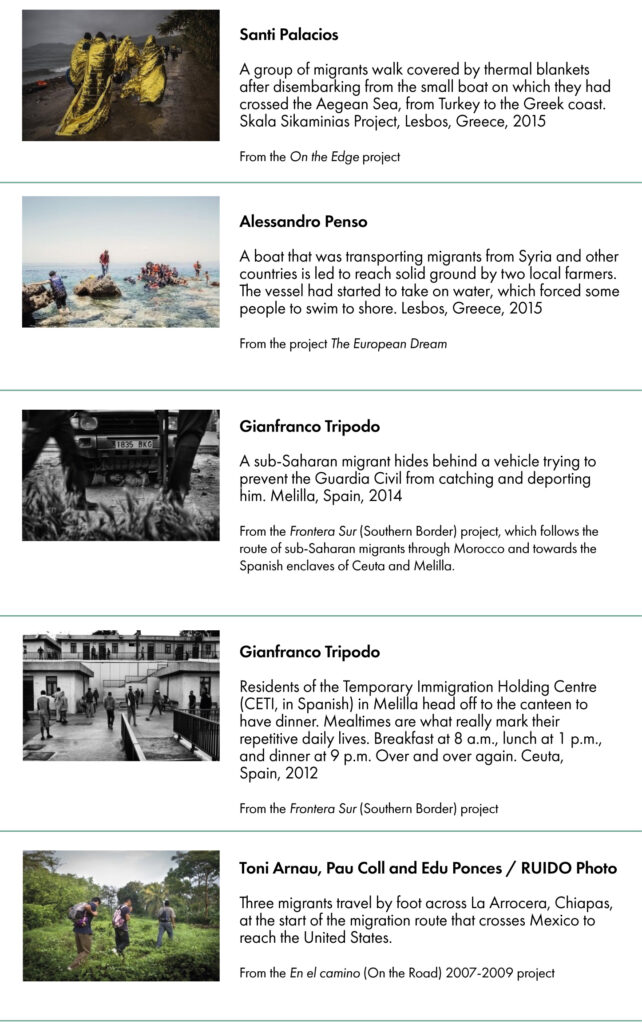
UNSTOPPABLE MIGRATORY FLOWS
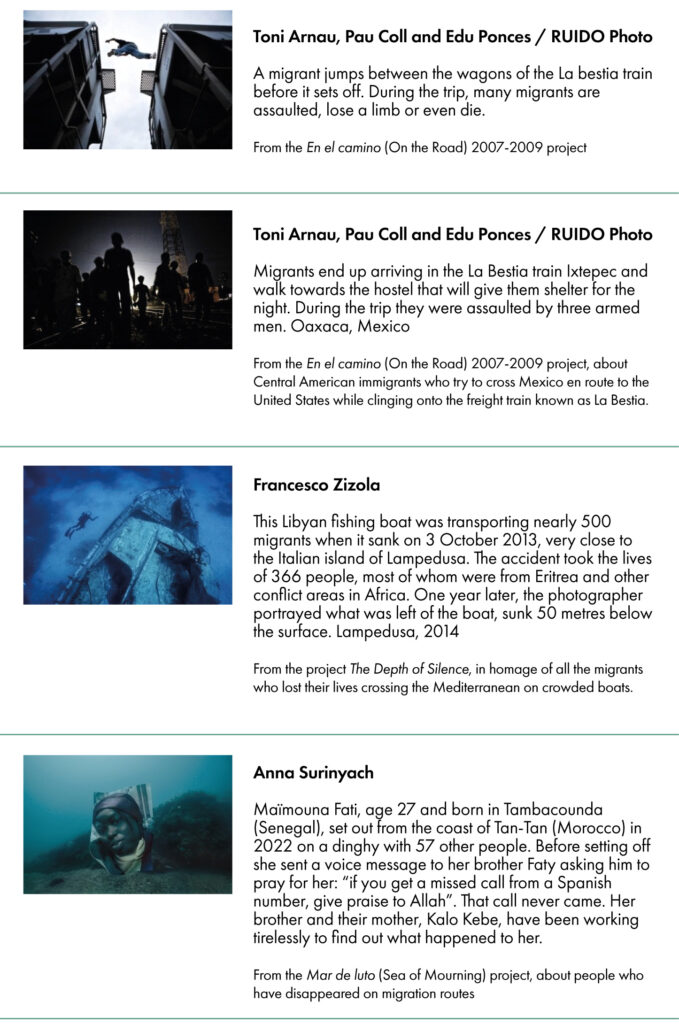
Every day, hundreds of people leave the country where they were born due to war, dictatorship, poverty, hunger, or the devastation wreaked by climate change. Others simply seek a better future for themselves or to provide for their families back home. In any case, the journey is never easy, and it entails multiple risks, whether because of the danger inherent to the route or the human traffickers that prey on migrants and their meagre resources. Migrants often die or disappear along the way, and their families have no way to find them. Those who arrive safely often face increasingly restrictive immigration policies.
Here we present a series of photographic projects that shine a spotlight on some of the most dangerous migration routes in the world and on the people who resort to them.
PROTECTING THE ENVIRONMENT
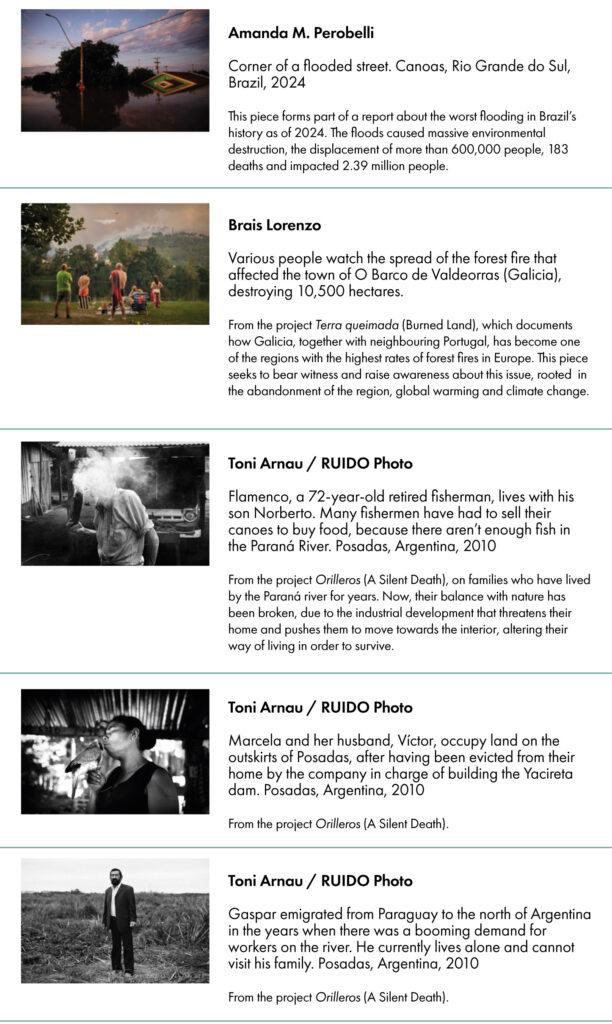
Humanity currently lives racked by droughts and hurricanes, fires, and floods. Climate change has taken shape in recurring natural disasters. Too often, human action worsens these situations through the excess exploitation of resources, unsustainable industrial development, or the neglect of natural spaces.
Photography captures this critical moment of our history, directly portraying extreme meteorological phenomena and the destruction of ecosystems, but also focusing on the communities who directly suffer from it, who watch hopelessly as their means of survival disappear and who are forced to migrate in search of work and food, because we have upset the balance that sustained human life on the planet.
FOCUSING ON THE PERIPHERY
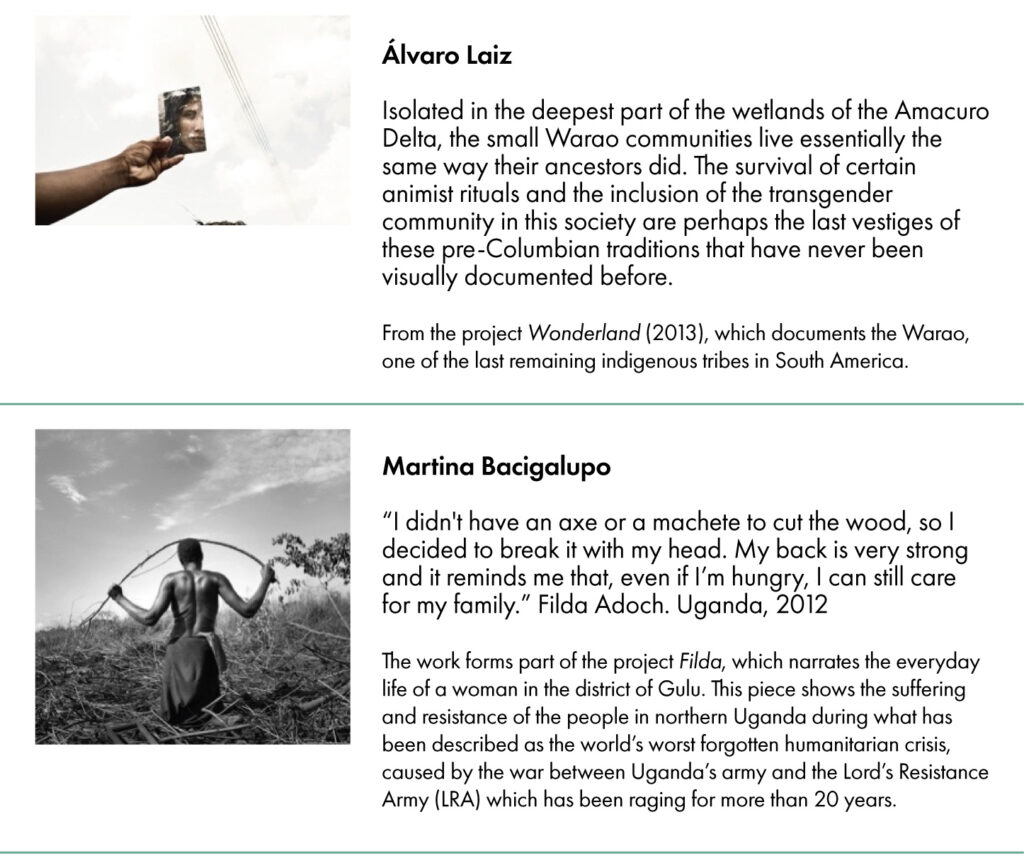
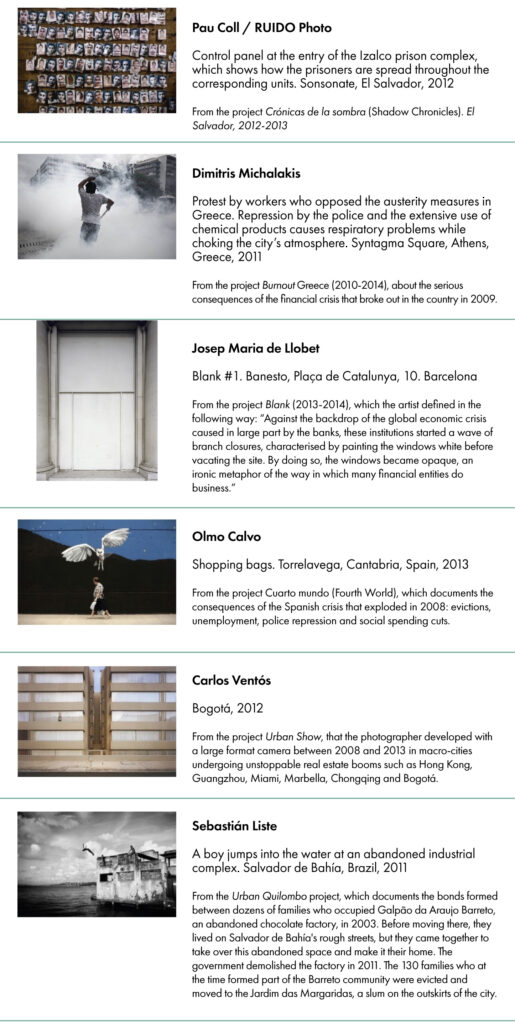
The shadows, smoke and cracks in cities are quality of life indicators for the people living there. Economic crises and inequality, crime and a lack of opportunities, diseases and addictions are all sources of marginalisation. This is also true in countries that boast public policies that should protect the common good, a fact that questions the viability of our system.
We live under the influence of content developed to keep us entertained, distracted, and anaesthetised from reality. However, documentary practices often try to explore our society by focusing on its peripheries. The lives on the edge, the struggle for survival among vulnerable communities and the stories of individuals facing adverse situations add to the official narrative and illuminate that which evades the control of governments or that which they prefer to sweep under the rug. Accessing these life stories and their challenges, which as a society are also incumbent upon us, gives us the opportunity to give nuance to our understanding of the world and gain a critical awareness.
IN BODY AND SOUL
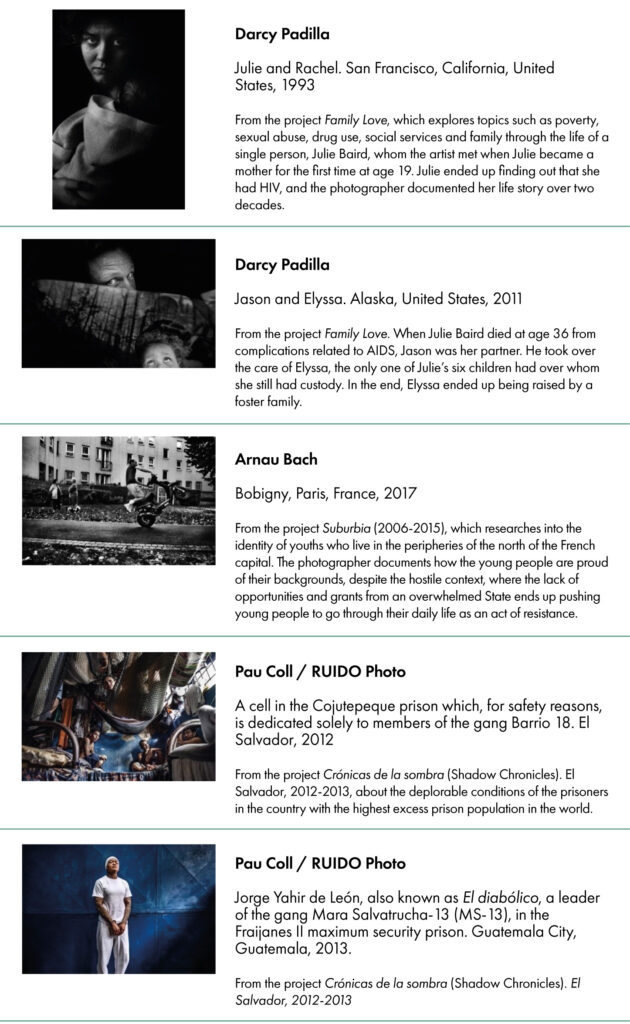
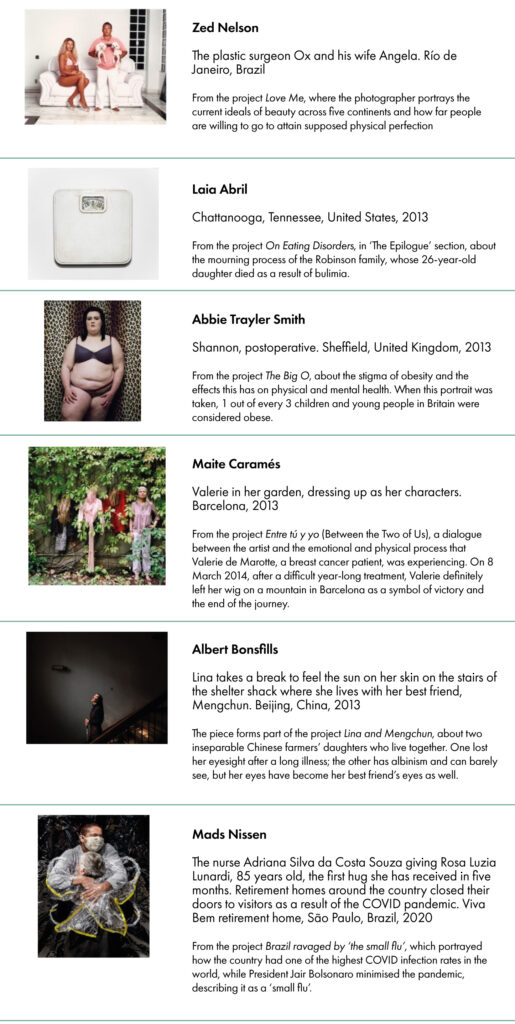
Who we are depends on multiple factors. Our identity can be defined by the environment where we grew up, the memories passed down by our ancestors, the community we belong to, the political context we live in or the predominant values system. All these issues create internal conflicts which, in turn, represent those of our society.
Our identity also manifests itself on our skin, through our appearance that shows the passage of time and reflects life’s insecurities and choices. Our bodies are battlefields that not only face off against diseases, but also public health challenges and aesthetic trends that homogenise our experiences and expectations.
Whether it is meant to raise awareness or highlight a presence, photography is an ideal tool to explore our essence.
Curated by
Teresa Martelo (Photographic Social Vision Foundation)
Produced by
Banc Sabadell Art Collection and Xavier Miserachs Photography Biennial
Exhibition design by
Teresa Martelo and Inés Muñoz (Photographic Social Vision Foundation)
Graphic design
Carles Reig
Linguistic advice and translation
Núria Sàbat, Daniel Parsons and Flavie Marczoch
Texts printed by
Gràfiques Agustí
Assembly
Pujol carpentry